Understanding Peptide Pureness Screening
Recognizing Peptide Pureness Screening
These are valuable in the best setup, yet they should be taken method-specific proof as opposed to a global replacement for HPLC and MS. Yet peptide purity is arguably the single crucial high quality statistics for any kind of research peptide. It directly affects the dependability and reproducibility of speculative results. A peptide detailed at 75% purity and one at 99% pureness aren't simply various grades-- they can produce meaningfully different outcomes in the same assay.Not every application needs 99% purity, and purification is a considerable element of peptide production expense. Trace amounts of solvents made use of during synthesis and filtration-- acetonitrile, dimethylformamide (DMF), dichloromethane-- can continue to be in the final product. These are normally present at very reduced degrees in effectively made peptides and are regulated by ICH Q3C standards for appropriate limits. If the target peptide's optimal represent 99.1% of the overall peak area, the peptide is reported as 99.1% pure by HPLC. Several trusted study peptide suppliers make use of third-party labs; some conduct internal screening with magazine of lab qualifications.
By demanding peptides that include verification of purity and identity, scientists can greatly minimize the danger of experimental artifacts. On the other hand, making use of peptides that have actually passed third-party lab recognition assists guarantee that the observed experimental impacts are truly due to the desired peptide and not because of contaminants or errors. When you see peptides promoted as "research-grade," it describes their meant use and the degree of manufacturing oversight. Research-grade peptides are produced lab research use only-- they are not produced under pharmaceutical GMP criteria and are not suggested for use as therapies or in people. These peptides come with a fundamental quality assurance bundle, usually including HPLC pureness analysis and MS confirmation of identity, ensuring they meet scientific requirements for purity and structure.Lack Of Effective Approaches For Structural Adjustments And Sequence Confirmation

Kinds Of Contaminations Hplc Identifies
The friend page on why 99 percent purity issues explains why tiny impurity percents can still matter in delicate in-vitro assays. Along with this peptide testing guide, those web pages create the trust-methodology layer behind the product magazine. Peptide testing is powerful, but researchers must read the range of each technique thoroughly.Peptide pureness refers to the quantity of the appropriate peptide in the peptide item. Nonetheless, for overall top quality assessment or the characterization of peptides for a selection of applications, added analytical tests are advised. As an example, in order to guarantee success in various peptide experiments, it might be required to eliminate trifluoroacetic acid (TFA), or to evaluate the solubility of hydrophobic peptides before doing the called for experiments. Throughout the detection, we make use of RP-HPLC combined with MS to determine the molecular weight of the peptide. The outright amount of the right peptide in an example is the item of the peptide web content and the peptide pureness. BOC Sciences has a top-tier peptide high quality screening system, integrating sophisticated analytical technologies and high-end instrumentation to supply exact and reliable peptide high quality analysis solutions.
These can be especially problematic due to the fact that their chromatographic habits is extremely similar to the target peptide, making them more challenging to divide throughout filtration. When a peptide is 98% pure, that continuing to be 2% isn't arbitrary noise-- it's specific, recognizable sorts of by-products. Mass spectrometry gauges the molecular weight of a substance with severe accuracy. For peptides, one of the most usual methods are electrospray ionization (ESI-MS) and matrix-assisted laser desorption/ionization time-of-flight (MALDI-TOF). HPLC separates a mixture right into its individual elements based upon just how each particle communicates with a specifically designed column.
Where Can I Acquire Lab Tested Peptides?
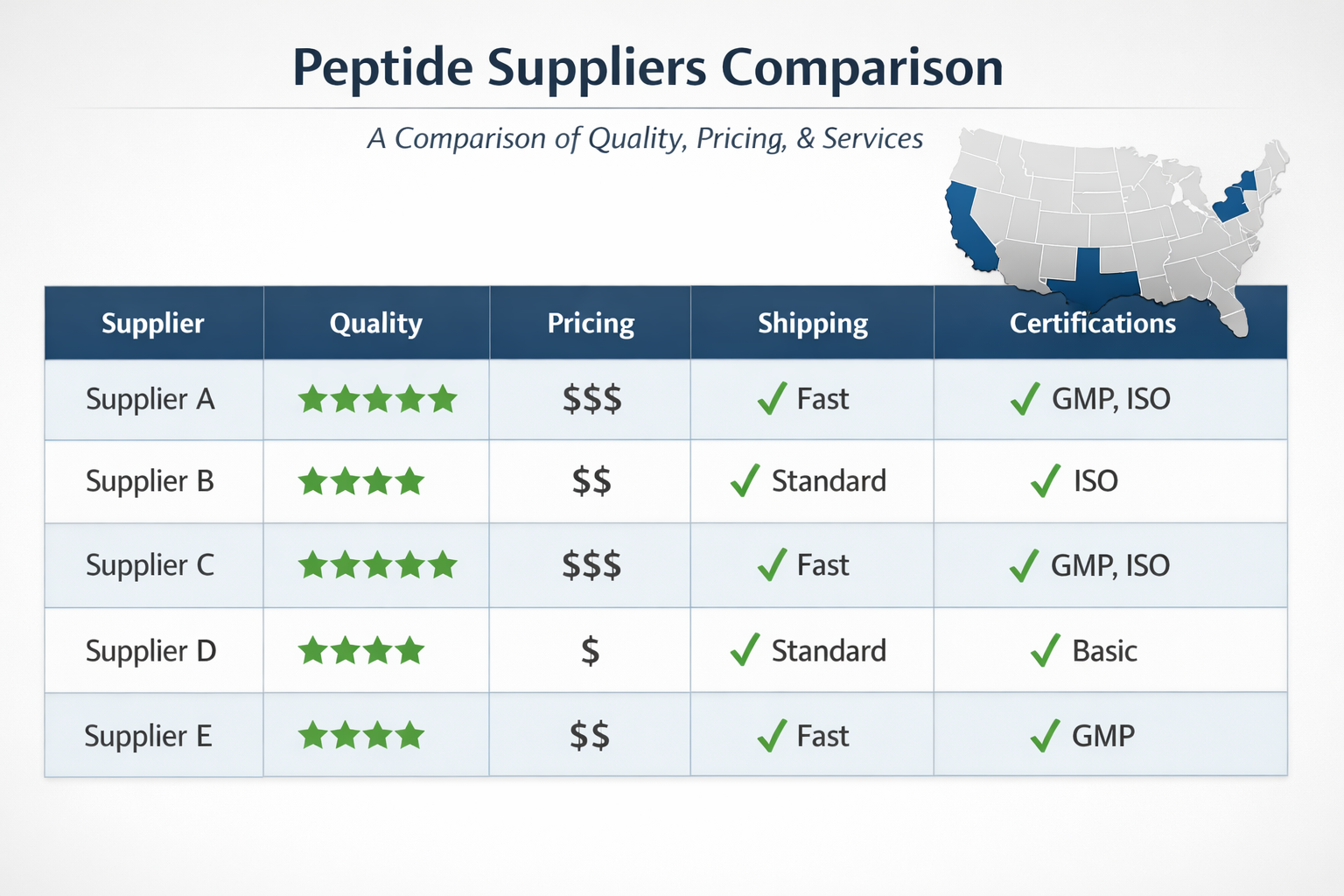
- The primary logical methods for peptides consist of fluid chromatography (LC), commonly HPLC, incorporated with mass spectrometry (MS) for exact molecular weight resolution and sequence validation.
- Apex's Just how to Read a Peptide COA overview walks through this procedure step by step.
- Equipped with this understanding, you can with confidence interpret tags like "95% purity, research study grade" and utilize those peptides to drive your experiments without complication.